Embedded Insurance: The Next Big Opportunity For Insurers And Digital Platforms
The way people buy insurance is no longer slow or complicated; it’s smart, quick, and digital. Today’s customers start with a simple online search, comparing policies, premiums, and reviews before making a decision. In fact, nearly 74% of users gather information online first, making digital platforms the new starting point of the insurance journey.
This shift has unlocked the rise of embedded digital insurance, where coverage is seamlessly offered while booking a flight, buying a gadget, or using a fintech app. With just a few clicks, users can choose plans, upload documents, and receive instant confirmations.
For insurers, this is more than convenience; it’s a massive opportunity to reach wider audiences and deliver value in real time. Embedded insurance is not just a trend; it’s transforming how the insurance industry is experiencing a fast-moving digital world.
This blog will examine embedded insurance, its rising popularity, and the benefits that insurers can derive from this expanding market.
What Is Embedded Insurance, And How Does It Work Within Digital Platforms?
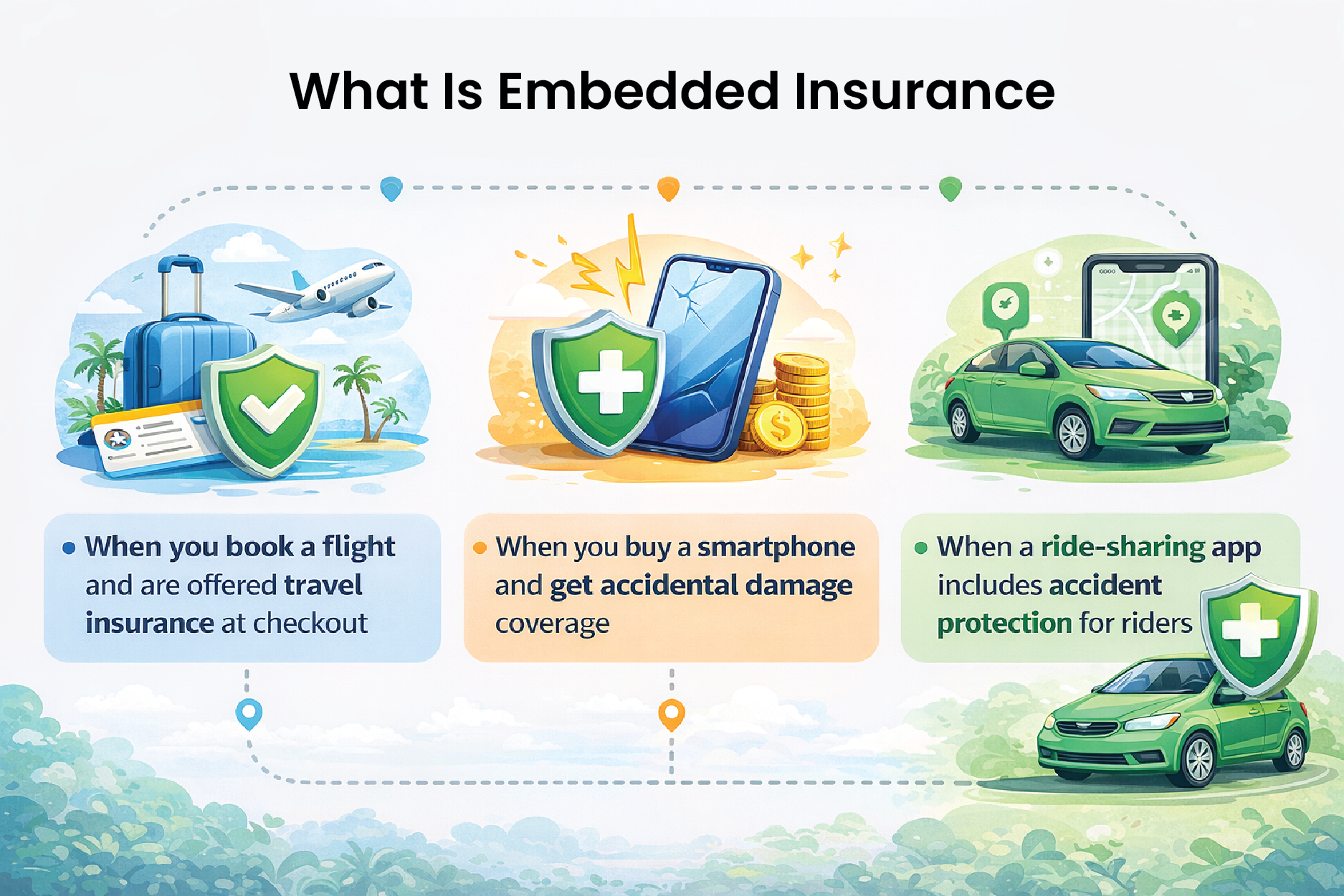
Embedded insurance refers to insurance products integrated directly into the purchase process of another product or service. Customers can obtain protection, which lets them add coverage to their transaction instead of buying insurance separately.
For example:
- When you book a flight and are offered travel insurance at checkout
- When you buy a smartphone and get accidental damage coverage
- When a ride-sharing app includes accident protection for riders
In these situations, insurance becomes a natural part of the buying journey.
The technology behind this process has a digital insurance platform connected through APIs. When a customer reaches a certain point in the purchase process, the system automatically offers relevant insurance options.
Behind-the-scenes software integration for insurance agencies and product sales websites manages final billing or claims processing.
This approach makes insurance easier to buy, faster to deliver, and more relevant to the customer’s needs.
The Role Of Technology In Embedded Insurance
Embedded insurance forms part of digital technology. At its core, this technology enables insurers to embed their protection services into digital platforms and standard operating procedures.
Digital ecosystems now enable insurers to deliver customer service with the highest efficiency while offering customized solutions.
The technologies that power this transformation include:
- Artificial Intelligence (AI): AI helps insurers analyse customer data, compute risk assessments, and automate underwriting for claims settlement. All this leads to better operational performance, with the highest customer satisfaction.
- API Integration: APIs enable embedded digital insurance services to be integrated with applications and e-commerce websites. Like travel booking systems, it offers Travel insurance to choose from, with policies issued upon payment.
- Data Analytics: Advanced analytics helps companies understand customer behavior and offer customized insurance coverage matching individual needs.
- Internet of Things (IoT): Telematics devices, in automobiles, smart home technologies, and wearable devices, transmit real-time data to analyze usage-based and behavior-based insurance policies.
The combination of these technologies creates an embedded insurance solution where customers have a seamless experience in the digital economy.
Why Is Embedded Insurance Becoming Popular Among Insurers And Fintech Companies?
Embedded insurance is gaining strong attention from insurers, fintech companies, and digital platforms for several reasons.
1. Changing Customer Expectations
Modern customers prefer convenience. They want services integrated within apps they already use. Embedded insurance provides coverage without requiring customers to leave the platform.
2. Faster Digital Distribution
Traditional insurance distribution depends heavily on agents or brokers. Digital insurance distribution enables companies to reach customers through e-commerce platforms, fintech apps, travel portals, and mobility services. This expands the market reach of insurers.
3. New Revenue Opportunities
Digital platforms can earn commissions by offering insurance to their users. This creates an additional revenue stream while improving the value of their service.
4. Data-Driven Insurance Products
Digital platforms collect large amounts of customer data. This allows insurers to design more personalized products through advanced digital insurance solutions.
For example:
- Travel insurance during flight bookings
- Device protection for electronics purchases
- Rental insurance in mobility apps
- Such contextual products are more relevant and easier to sell.
How Does Embedded Insurance Improve Customer Experience And Insurance Accessibility?
One of the biggest advantages of embedded insurance is the improvement in customer experience.
In traditional models, buying insurance requires several steps:
- Research insurers, appropriate policies
- Compare service providers
- Fill handwritten forms
- Provide relevant documentation in hard copies.
- Embedded insurance removes most of these steps.
Customers receive coverage the moment they need it. This reduces time and simplifies decision-making.
Key Customer Benefits
- Convenience, time saving
- Insurance is offered directly within the platform where the transaction is happening.
- Faster Purchases
- Policies are issued digitally in paperless form.
- Relevant Coverage on optimised terms.
- Insurance products are tailored to the product and relevant to purchase.
- Improved Accessibility
- Hundreds of customers who previously did not consider insurance now get access to it through digital platforms.
This is particularly important in Indian markets, where many people lack adequate purchase protection.
How Can Embedded Insurance Help Insurers Reach New Customer Segments?
Embedded insurance offers insurers reach to customers that may not be possible through traditional channels. By partnering with digital platforms, insurers can access users from multiple sectors, such as:
- E-commerce platforms
- Travel booking websites
- Mobility services
- Fintech apps
- Healthcare platforms
These partnerships enable insurers to integrate insurance into everyday transactions.
For example:
- A fintech platform offering credit insurance
- An online marketplace providing product protection
- A logistics platform offering shipment insurance
Digital insurance enables insurers to establish real-time connections with hundreds of users. Insurers need robust insurance management to handle their operational requirements.
This software automates underwriting and claims processing, with policy management. The digital ecosystem establishes a highly effective growth avenue for insurance companies.
The Future Of Embedded Insurance
The future of embedded insurance lies in deeper integration, personalization, and real-time responsiveness. What began as simple add-on coverage during digital transactions has now evolved into Embedded Insurance 2.0 powered by AI, data analytics, and connected ecosystems.
Unlike earlier models, 2.0 delivers dynamic, context-aware protection tailored to individual needs at every stage of the customer journey. Insurance is no longer a one-time purchase but an always-on service that activates precisely when required.
As technology continues to advance, embedded insurance will become more predictive, intuitive, and invisible—seamlessly blending into everyday digital experiences while offering smarter, faster, and more relevant protection to users.
Several trends will shape the future of this space:
1. Growth of Platform Ecosystems
Digital platform users will continue expanding into financial services, including insurance.
2. Rise of InsurTech Companies
New technology-driven insurance companies are building innovative digital insurance solutions.
3. Increased Personalization
Data analytics and AI will help insurers offer highly personalized insurance products.
4. Expansion Across Industries
Embedded insurance will expand beyond travel and electronics to sectors such as:
- Health tech
- Mobility
- Gig economy
- Smart devices
For insurers that adapt early, embedded insurance can become a powerful growth channel.
If insurance companies are looking to adopt modern digital insurance distribution strategies, platforms like Ensurite can help streamline the process with advanced insurance software solutions designed for the evolving digital ecosystem. The benefits to business growth are many.
Final Thoughts
The current embedded insurance distribution and consumer usage are transforming the markets like never before. With this system, insurers can protect customers in their most critical moments. The direct integration of the insurance platform with digital platforms offers customers convenience, making services more accessible and developing new markets.
Insurance companies can create sustainable business ecosystems through digital insurance platforms, involving insurance agencies, insurance management software, and other digitally embedded insurance solutions.
The growth of digital commerce, along with embedded insurance, shall form an essential component in financial services. The organizations that develop their insurance software solutions and establish digital partnerships will gain a superior position to drive industry changes.
The embedded insurance systems become easier for organizations through their partnership with Ensurite, as experts, to offer both essential technology and operational infrastructure essential for digital insurance.
Frequently Asked Questions
Why Are Fintech Platforms Interested In Embedded Insurance?
Fintech companies use embedded insurance to add value for customers while generating new revenue through commissions and partnerships with insurers.
Is Embedded Insurance Beneficial For Customers?
Yes. It simplifies the insurance buying process by offering relevant coverage instantly during a transaction, making insurance more convenient and accessible.
What Technology Is Required To Support Embedded Insurance?
Embedded insurance relies on technologies like digital insurance platforms, API integration, insurance management software, and insurance software solutions to automate policy issuance, pricing, and claims management.