The Future Of AI In Insurance: Balancing Innovation & Regulation
The insurance industry is in a transition phase, with significant change, and everything is evolving fast. Customer expectations are growing, digital channels are becoming the norm, and regulatory requirements continue to grow. At the same time, insurers and brokers are under pressure to meet expectations while maintaining the trust and expertise that customers expect.
Artificial intelligence is emerging as one of the most influential forces shaping the future of insurance. However, the real challenge is not simply adopting AI. It is implementing it responsibly while maintaining regulatory compliance, customer trust, and operational resilience.
As the future of the insurance industry takes shape, businesses need to find the right balance between innovation and compliance (regulations). Those who embrace change without losing sight of customer needs, compliance requirements, and operational stability will be in the strongest position to lead the market. In this blog, we will understand in detail.
Key Insurance Areas Where AI Innovation Matters
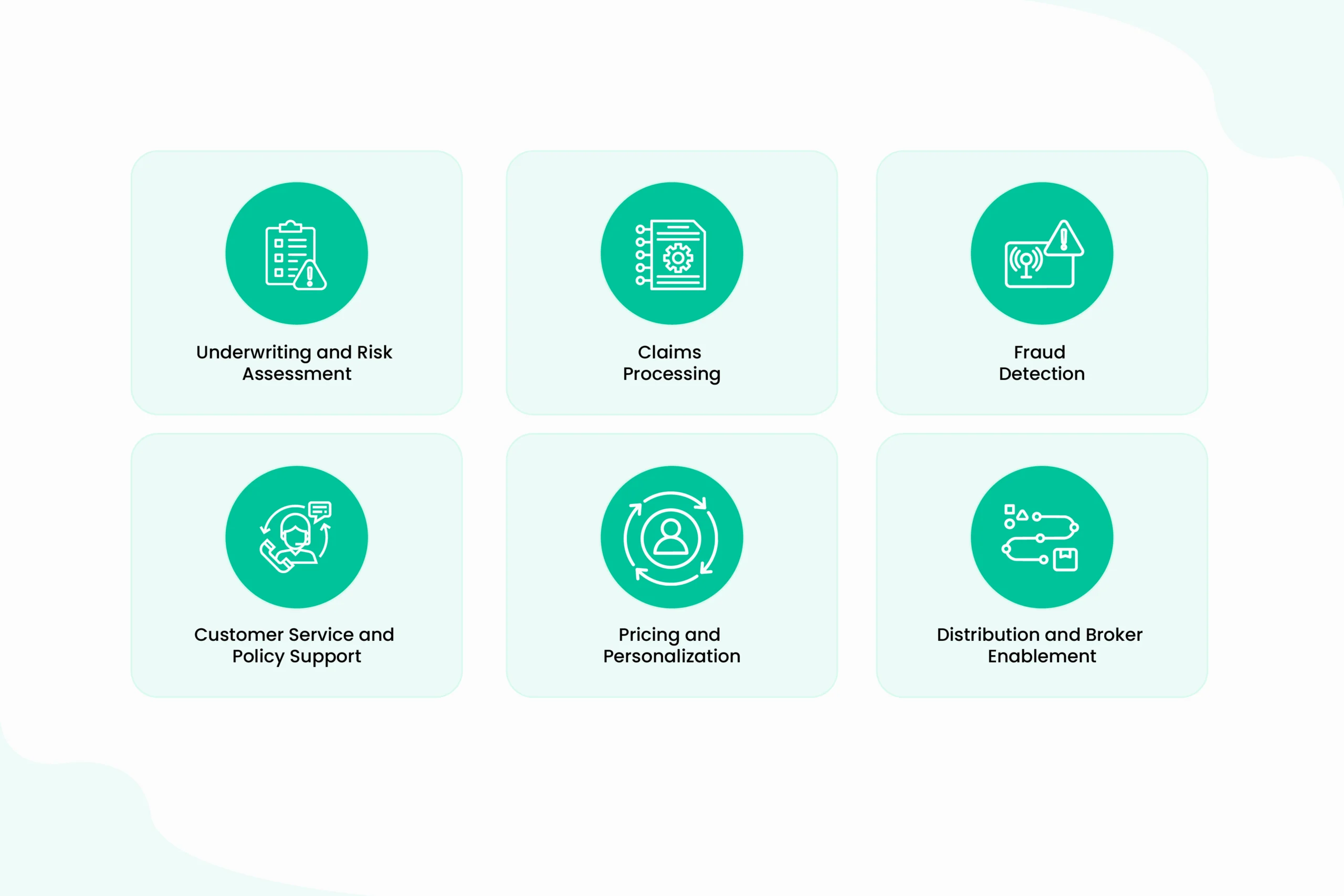
The way insurance is bought, sold, and managed has changed significantly over the last few years, especially after artificial intelligence has entered the industry. Since then, it has created value for insurers, reinsurers, brokers, and customers. While AI can literally support multiple areas across the insurance value chain, from underwriting and claims to customer service, fraud detection, pricing, and distribution. Here are some of the key areas where AI innovations actually matter:
- Underwriting and Risk Assessment
Underwriting depends on accurate risk evaluation. AI can support underwriting teams by analyzing large volumes of data faster and highlighting patterns that may not be easy to identify manually. It can help underwriters detect missing information, compare risk signals, identify unusual patterns, and make more informed decisions.
- Claims Processing
AI can help speed up claims by reviewing documents, extracting information, identifying claim type, checking policy details, estimating damage, and flagging claims that may need further investigation. For simple or low-risk claims, AI can help reduce turnaround time. For complex claims, it can support adjusters by organizing information and bringing attention to important details.
- Fraud Detection
Fraud patterns are often difficult to detect because they may appear across multiple claims, documents, locations, behaviors, or customer histories. AI can help identify suspicious patterns, detect anomalies, compare claims against historical data, and flag cases that may require investigation.
- Customer Service and Policy Support
Customers today expect quick answers, simple communication, and easy access to policy information. AI-powered support tools can help answer common questions, guide customers through policy details, assist with claim updates, and support service teams with customer history and recommended next steps. This can improve response time while reducing the workload on service teams.
- Pricing and Personalization
AI can also support pricing and product personalization by helping insurers analyze risk patterns, customer behavior, claims trends, and market conditions. This can help insurers move away from broad assumptions and build more relevant pricing or product recommendations.
But this is also one of the areas where responsible AI becomes extremely important. Pricing decisions must remain fair, explainable, and compliant with regulatory expectations.
- Distribution and Broker Enablement
AI can support insurance distribution by helping insurers and brokers identify better opportunities, prioritize leads, understand customer needs, recommend suitable products, and improve follow-up timing.
For insurance brokers, this can reduce administrative burden and help them focus more on advisory conversations and relationship-building. This is where AI becomes especially useful in modern insurance distribution — not by replacing brokers, but by giving them better visibility, faster access to information, and more time to serve customers well.
Why Responsible AI Matters In Insurance?
Responsible AI refers to developing and using artificial intelligence in a fair, transparent, secure, and accountable manner while ensuring compliance, ethical decision-making, and human oversight.
As insurers and brokers increasingly adopt artificial intelligence across underwriting, claims management, fraud detection, and customer service, responsible implementation has become just as important as innovation itself. Insurance decisions directly affect people’s premiums, coverage, claims, eligibility, and financial protection. If AI is used without proper governance, even a small issue in data, logic, or model behavior can create serious consequences for customers and insurers.
For instance, AI models often learn from historical data, and if that data contains past inequalities or incomplete patterns, the model may repeat or amplify those issues. In insurance, this can affect underwriting, pricing, claims decisions, risk scoring, and customer segmentation.
Insurance companies handle sensitive personal, financial, health, property, and behavioral data. Using AI responsibly means protecting that data, limiting unnecessary access, ensuring secure processing, and maintaining clear accountability over how information is used. Organizations that invest in responsible AI practices today will be better positioned to manage future regulatory expectations and maintain confidence among customers, partners, and stakeholders.
How Are Regulators Responding To AI Adoption In Insurance?
As artificial intelligence becomes more deeply integrated into insurance operations, regulators are paying closer attention to how these technologies are developed, deployed, and monitored. While AI offers significant opportunities to improve efficiency and decision-making, it also introduces new risks that require careful oversight.
Insurance organizations are increasingly expected to demonstrate that AI-driven decisions are fair, transparent, and supported by reliable data. This is particularly important when AI is used in areas such as underwriting, claims assessment, fraud detection, and customer interactions, where decisions can directly affect policyholders.
Regulators are focusing on several key areas of AI adoption in Insurance, including:
- data privacy and security
- model governance and documentation
- bias testing and fairness checks
- explainability of AI-supported decisions
- human oversight for high-impact outcomes
- third-party AI vendor risk
- audit trails and evidence of compliance
- ongoing monitoring after deployment
Rather than slowing innovation or just adopting AI, there is a need for governance across its lifecycle. Effective governance helps insurers adopt AI with greater confidence. Businesses that build strong governance frameworks today will be better prepared to meet evolving regulatory requirements while maintaining customer trust and operational stability.
Managing Bias And Building Trust In AI Systems
Customers buy insurance because they expect support during uncertain or difficult situations. If AI makes decisions that feel unclear, unfair, or difficult to challenge, that trust can weaken quickly.
To address these challenges, many organizations are implementing stronger governance frameworks in their AI adoption journey. This includes:
- testing AI systems for bias before and after deployment
- using high-quality and relevant data
- maintaining clear documentation of AI models and decision logic
- keeping human oversight for sensitive decisions
- monitoring model performance over time
- explaining AI-supported decisions where necessary
- protecting customer data at every stage
- reviewing third-party AI tools before using them in regulated processes
Managing bias and transparency is not only a compliance activity. It is a customer trust activity. Insurance businesses that handle AI responsibly will be better positioned to use innovation confidently while protecting the relationships that the industry depends on.
What Should Insurers Prioritize Before Scaling AI?
The insurance industry is evolving rapidly, and leading organizations are focusing on strategies that drive sustainable growth while helping them stay competitive in a changing market. While priorities differ from one business to another, several key areas continue to receive significant attention:
- Modernizing distribution networks to strengthen collaboration between insurers, brokers, agents, and partners while improving market reach.
- Enhancing customer experiences through faster service, personalized interactions, and seamless digital journeys across multiple channels.
- Investing in responsible AI adoption to improve efficiency while ensuring transparency, fairness, and accountability in decision-making.
- Strengthening governance and compliance frameworks to meet evolving regulatory requirements and manage operational risks effectively.
- Improving data quality and accessibility to support better decision-making, more accurate risk assessments, and stronger business insights.
- Prioritizing cybersecurity and data protection as organizations manage increasing volumes of sensitive customer and business information.
- Streamlining operations through digital transformation to reduce complexity, improve efficiency, and support long-term scalability.
Ultimately, the goal is not simply to adopt new technology but to build agile, customer-focused operations that can adapt to changing market conditions while maintaining trust, compliance, and sustainable growth.
What Does The Future Hold For Brokers And Insurers?
Looking ahead, the future of insurance will be shaped by the ability to combine technological innovation with human expertise- hence, a collaborative approach should always be there to create a balance. Artificial intelligence will continue to support underwriting, claims management, customer engagement, and operational decision-making, but human judgment will remain essential. Here is what it holds for the stakeholders:
- For Brokers: Invest in AI literacy, specialize in high-touch advisory, partner with innovative carriers.
- For Insurers: Build transparent, auditable AI systems; prioritize hybrid human-AI teams; engage proactively with regulators.
- Industry-wide: Foster collaboration on ethical AI standards and shared data pools (while respecting competition and privacy).
Final Thoughts
The future of insurance will not be defined solely by how quickly organizations adopt artificial intelligence. It will be shaped by how effectively they integrate technology into their operations while maintaining transparency, accountability, and customer trust.
As AI capabilities continue to advance, insurers face a growing responsibility to ensure that innovation is supported by strong governance, effective risk management, and clear oversight. Organizations that focus only on automation may achieve short-term efficiencies, but long-term success will depend on responsible implementation and sustainable business practices.
While AI will continue to play an important role, it is only one part of a broader transformation taking shape across the industry. Customer expectations, digital distribution, data security, regulatory audit requirements, and operational efficiency are all shaping the future of insurance.
The businesses that thrive shall be those that balance innovation with accountability, efficiency with trust, and technology with human expertise.
At Ensurite, we believe the future of insurance lies in helping brokers and insurers simplify distribution, embrace innovation with confidence, and stay focused on delivering value to the customers they serve. This is what the insurance distribution solution reflects, but don’t just take our words for it. Instead, just take a free trial to see how it works for your business.
Explore more Blogs: https://ensurite.solzit.com/blog/
Frequently Asked Questions
What are the most common applications of AI in insurance today?
Common AI applications include claims automation, fraud detection, customer service chatbots, risk assessment, underwriting support, predictive analytics, policy recommendations, and document processing for faster decision-making.
Why is AI becoming a strategic priority for insurers worldwide?
AI helps insurers improve efficiency, reduce costs, enhance customer satisfaction, manage risks more accurately, and stay competitive in a rapidly evolving digital insurance landscape.
How does AI enhance customer experience in the insurance sector?
AI improves customer experience through personalized policy recommendations, instant support via chatbots, faster claims processing, proactive communication, and seamless digital interactions across multiple channels.
Can AI help insurers detect and prevent fraud more effectively?
Yes, AI analyzes large volumes of data to identify suspicious patterns, detect anomalies, flag fraudulent claims, and support investigators, helping insurers reduce fraud-related losses.
How can insurers ensure responsible and ethical use of AI?
Insurers can ensure ethical AI use by maintaining transparency, protecting customer data, reducing algorithmic bias, ensuring regulatory compliance, implementing human oversight, and regularly monitoring AI systems.